Why Dirty Solar Panels Lose Output and How to Clean Them
A film you can barely see from the ground can cost you real production, and the fix does not involve chemicals.
October 27, 2026 · 4 min read
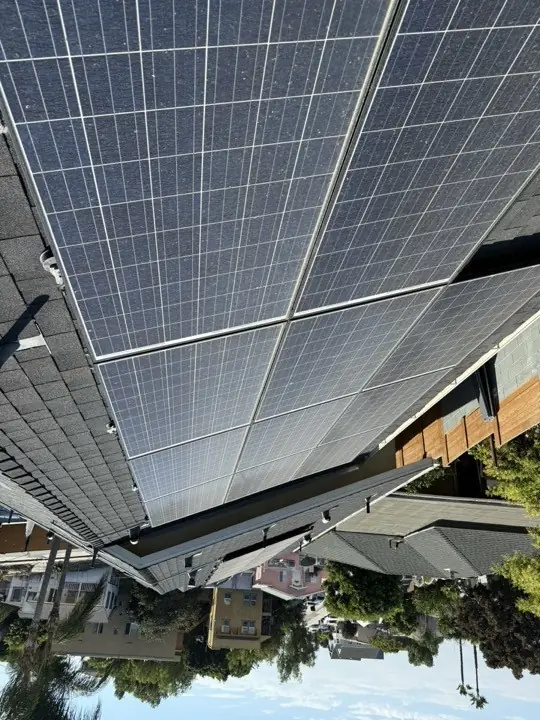
You paid for solar to cut your power bill, and the panels do their job quietly on the roof for years. That is the problem. Nobody looks at them. Dust, pollen, bird droppings and a thin salty film from the coast build up a little every week, and the panels make less power without anything looking obviously wrong from the street. A cleaning now and then is one of the cheapest ways to get back what you already paid for.
How dirt cuts your output
A solar panel works by letting sunlight through its glass to the cells beneath. Anything on the glass blocks some of that light. A light layer of dust dims the whole panel a bit. Bird droppings and caked-on debris do something worse: they shade a single cell, and because cells in a panel are wired in a chain, one shaded cell can pull down the output of more than you would expect.
Integrity Pro Washers says dirty panels lose up to 25% efficiency. That is the company's own claim and an upper-end figure, not a promise for every roof. What you actually lose depends on how dirty the panels are, how long since the last good rain, and how your system is set up. A lightly dusty array loses much less than one under a tree or beside a dusty lot. The sensible way to find out is to look at your own numbers.
Why San Diego panels get dirty
Our dry months do not rinse anything off. Rain, when it comes, can wash off loose dust but often leaves streaks and a ring of grime along the lower edge, where dirt collects against the frame. Pollen season coats everything. Roofs near the coast pick up a salty film from the marine air. Roofs near trees collect leaves, sap and bird visitors, and roofs near construction or dirt lots get a steady dusting.
How panels are cleaned without chemicals
The method is simple, and that is the point. The crew uses purified water and soft brushes. No detergents, no harsh chemicals and no high pressure. Purified water has the minerals taken out of it, so it dries without leaving spots, and the panels come out streak-free. The soft brush loosens what the water alone cannot, like dried droppings and baked-on film, without scratching the glass.
Pressure and strong chemicals are the wrong tools here. A hard stream can force water into the edges of a panel, and harsh cleaners can damage the coating on the glass or leave residue that attracts more dirt. If you are unsure, check your panel maker's care guidance. Most of them say the same thing: gentle, clean water and a soft touch.
Why this is a job for a pro, not a ladder
The honest case for hiring it out is safety. Roofs are steep and slippery when wet, panels get slick, and a fall from a roof is a bad day that no power savings will fix. A crew that cleans panels every week knows where to stand, what to wear and how to reach the middle of an array without stepping on anything fragile. Panels are also hot to the touch on a bright afternoon, and cold water on hot glass is not good for it, which is one reason mornings are a smart time to book.
A cleaning visit is also a close look at the array. While the crew is up there, they can spot cracked glass, debris stuck under the frame and signs of nesting birds. Integrity Pro Washers lists spotting potential issues early as one of the benefits of the service, and one customer's Google review mentions that Josh calls her when it is time to clean her panels again.
How often to clean, and how to know it worked
There is no single schedule. A roof with few trees and some rain might need one cleaning a year. A roof near the coast, a dirt lot or a lot of birds may want two or more. Use your monitoring app. Note your daily production on a clear day before the cleaning, then compare it to a similar clear day after. If the number climbs, the cleaning paid for itself. If it does not move, you can stretch the interval.
- Check production on comparable sunny days before and after a cleaning.
- Look for a dust line or a film along the lower edge of the panels.
- Clean after pollen season, and again if birds or construction have been active nearby.
- Ask whoever services your system whether anything on the roof looks off.
Solar panel cleaning is one of four services Integrity Pro Washers offers, next to pressure washing, soft washing, and window and gutter cleaning. Josh's crew cleans panels across North Park, Mission Hills, Clairemont, La Mesa and the rest of San Diego County, and they can combine it with a window wash if you like. The quote is free and in writing, usually back within 24 hours. Call or text (619) 887-4442.
Integrity Pro Washers, (619) 887-4442
Call (619) 887-4442More articles
The Best Time to Pressure Wash in San Diego
A wash works in any month, but a few quirks of our coast make some weeks better than others.
Soft Washing vs. Pressure Washing for Stucco and Tile Roofs
The wrong pressure on the wrong surface causes damage that costs far more to fix than the wash cost to do.