How to Get Oil Stains and Rust Out of a Concrete Driveway
Fresh stains come out easily, and old ones depend on how deep they went. Here is what to expect either way.
October 27, 2026 · 4 min read
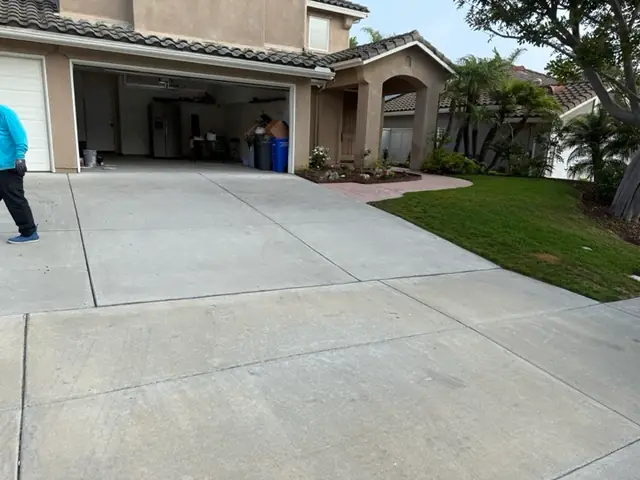
Look at any driveway where a car has parked for a few years and you will see the same dark spot. Concrete looks solid, but it is full of tiny pores, and oil soaks into them like water into a sponge. Rust works the same way from the other direction, leaving orange or brown marks from sprinklers, metal furniture, rebar or a toolbox that sat out in the weather. Here is how those stains actually come out, and what to expect when they do not fully go.
Why concrete holds onto stains
Fresh concrete is porous, and sealer, if there is any, wears off with sun and tires. An oil drip that lands on bare concrete starts sinking in right away. The longer it sits, the deeper it goes, and the more times it is driven over and baked by the sun, the more it sets. A drip from last week is a surface problem. A spot from three years ago is partly a problem inside the slab.
That is the honest answer to the question every homeowner asks. Fresh stains usually come out. Old, deep ones often lighten a lot, but they do not always vanish. A good washer will say that before they start, not after.
Step one is pre-treatment
Spraying water at an oil stain mostly moves it around. What works is treating the stain first. The crew puts down a degreaser or a stain-specific product and lets it dwell, which gives it time to break the oil down and pull it up out of the pores. The dwell time matters. A product sprayed and rinsed in thirty seconds does little. Time on the surface is what makes it work.
For a fresh spill at home, you can help yourself. Soak up as much as you can right away with an absorbent such as kitty litter or cornstarch, leave it for a few hours, then sweep it up and scrub with dish soap and a stiff brush. That gets a lot of recent drips out before they set.
What a surface cleaner and hot water add
Once the stain is pre-treated, equipment does the rest. A surface cleaner is a spinning bar under a round hood that rides across the concrete. Compared with a single wand, it covers the slab evenly and avoids the striped, tiger-pattern look you get when someone sweeps a wand by hand. It also keeps the spray under the hood, so the dirty water goes where the crew wants it.
Hot water is the other big factor. Oil is easier to break down when the water is warm, the same reason you use hot water on a greasy pan. Integrity Pro Washers works with commercial-grade hot water for pressure and power washing, which is a real advantage on oil. Between the pre-treatment, the hot water and the surface cleaner, most driveway stains drop a lot in one visit.
Rust is a different problem
Rust stains need a different approach from oil. A degreaser will not touch them. They respond to products made for rust, and the crew has to be careful because those products can affect some surfaces and plants nearby. The usual culprits are sprinkler heads that spray mineral-heavy water across the concrete, metal planters, bike racks and anything with iron in it that has sat wet. If rust keeps coming back, fixing the source matters as much as cleaning the mark. Redirecting a sprinkler head can save you from repeating the job.
Setting honest expectations
- Fresh oil and rust usually come out completely.
- Old, deep oil stains typically lighten, and some leave a faint shadow behind.
- Heavy stains can need a second pass or a repeat treatment.
- A clean driveway shows off remaining blemishes more, since the surrounding slab is now brighter.
- Sealing after a wash can slow future staining, and a washer can tell you if it makes sense for your slab.
One more thing to ask any washer about is where the dirty water goes. Oily, hot, soapy water cannot just run down the street into the storm drain. A professional crew blocks drains, contains the runoff and collects it for disposal. We cover how that works in a separate article on where wash water goes in San Diego. It is worth reading before you hire anyone, because the cheapest quote is sometimes cheap because that step was skipped.
Most home driveways take about 60 to 90 minutes. The published guide for a typical driveway runs about $150 to $300, and every job is quoted free in writing first. Your price depends on the size of the slab, how many stains need work and how much pre-treatment they need.
Josh's crew cleans driveways, garage floors, patios and walkways across South Park, Golden Hill, Normal Heights, Clairemont and the rest of San Diego County. Integrity Pro Washers is family owned and operated. Call or text (619) 887-4442 with a photo of your driveway and ask what it will take.
Integrity Pro Washers, (619) 887-4442
Call (619) 887-4442More articles
The Best Time to Pressure Wash in San Diego
A wash works in any month, but a few quirks of our coast make some weeks better than others.
Soft Washing vs. Pressure Washing for Stucco and Tile Roofs
The wrong pressure on the wrong surface causes damage that costs far more to fix than the wash cost to do.