Where the Wash Water Goes: San Diego Pressure Washing and the County BMPs
What leaves your driveway during a wash has to go somewhere, and in San Diego where it goes matters.
October 27, 2026 · 4 min read
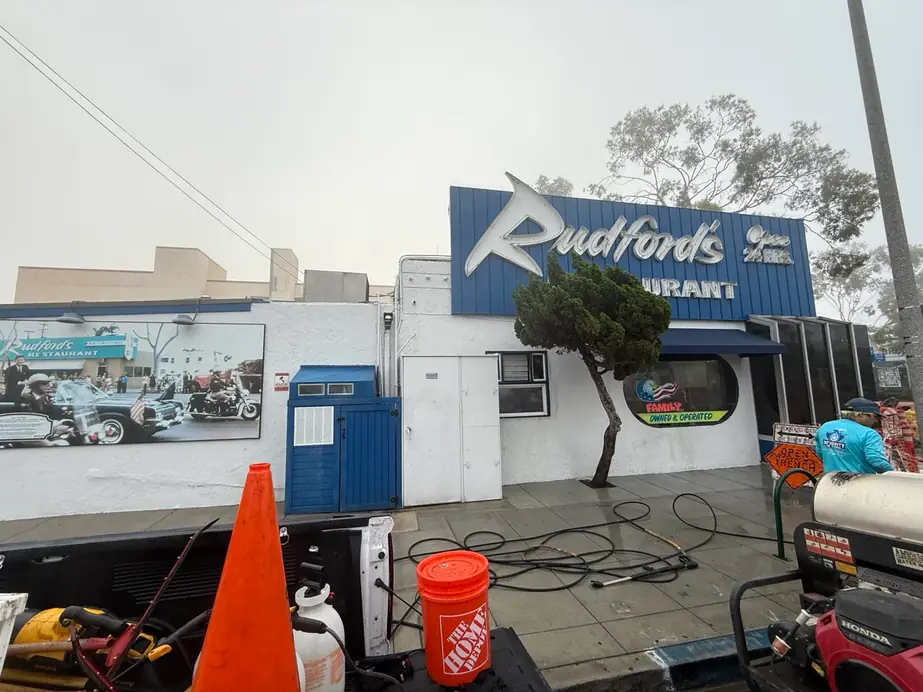
Most people watch a pressure wash and think about the surface getting cleaner. Fewer think about the water. A driveway wash sends dirty water across the ground, and that water carries soap, oil, sediment, paint chips and whatever else was on the concrete. Where it ends up is a real question in San Diego, and one you should ask before you hire anyone.
Storm drains are not sewers
Many homeowners assume the gutter in front of the house leads to a treatment plant. In most of San Diego it does not. Storm drains carry water, and everything in it, to canyons, creeks, bays and eventually the ocean. The sewer is a separate system. Anything that goes into a storm drain gets no treatment on the way. Our beaches are a big reason people live here, and wash water full of oil and detergent is exactly the sort of thing that should not be heading there.
What the county expects from mobile cleaners
The County of San Diego publishes best management practices, usually shortened to BMPs, for mobile surface cleaning. They cover the people who show up with a truck and a hose: how to keep wash water out of storm drains, how to collect it, and how to dispose of it. Integrity Pro Washers says it follows those BMPs, and it lays out its practices on an environmental compliance page of its own.
The basics are the same whoever is doing the work. Protect the drains. Contain the water. Collect it. Get rid of it properly. Each step is physical work with real gear, and a crew either has the gear on the truck or it does not.
What proper containment looks like
- Drain covers placed over nearby storm drains before the first spray, so water cannot get in.
- Berms and sandbags laid around the work area to keep runoff from leaving the site.
- Vacuum recovery, where a vacuum pulls the dirty water off the ground as the crew works.
- Onboard reclaim tanks that hold the collected water on the truck.
- Approved disposal, so the collected water goes where it is supposed to go and not down the street.
- Technician training, so everyone on the crew knows the steps and does them the same way each time.
Those are the practices Integrity Pro Washers lists on its Environmental Compliance page. You can see most of it happen in person. If a crew shows up and you spot sandbags, drain covers and a vacuum hose, that is a good sign. If you see a hose and a wand and nothing else, it is worth asking where the water is going.
Why this should matter to you as a customer
There are three practical reasons beyond the environment. First, it is a clue about the whole business. A crew that handles containment properly is usually careful about other things too, like protecting plants, keeping the job site tidy and showing up when they say. Second, your property is the one the water runs across. If dirty runoff ends up in a neighbor's yard, a shared driveway or the street, it can become your problem. Third, property managers and HOAs often have their own rules about what contractors may do on site, and a washer who contains and recovers water makes that conversation easy.
Commercial jobs make this more pressing. Parking structures, dumpster pads, restaurant frontages and warehouses can have grease, trash residue and heavy sediment. Integrity Pro Washers does this kind of work, and one customer's Google review describes a greasy commercial warehouse job handled well.
Questions to ask any washer
You do not need to know the rules by heart. Ask how they keep wash water out of the storm drain, and whether they cover drains and use berms or sandbags. Ask whether they collect the water and what they do with it afterward. Ask if the crew is trained in the county's mobile cleaning practices, whether they are licensed and insured, and whether the quote comes in writing with containment included. Listen to how the answers sound.
A confident, specific answer means they do it. A vague answer, or a laugh and a comment that everybody just lets it run, means you should keep calling. A low quote that skips containment is not really lower. Someone is paying for that water, and sometimes it ends up being the homeowner.
Containment and recovery add setup time and take gear and training, which is part of why a careful crew may not be the lowest bid. The published guides show pressure washing from about $150 to $500 and commercial work from about $500 to $2,500, and every job is quoted free in writing first. Ask what is included, and compare quotes on the same terms.
Integrity Pro Washers is family owned and operated out of South Park, and Josh's crew works across San Diego County for homes, restaurants, HOA common areas and warehouses. Call or text (619) 887-4442 and ask Josh how the crew handles water on your job.
Integrity Pro Washers, (619) 887-4442
Call (619) 887-4442More articles
The Best Time to Pressure Wash in San Diego
A wash works in any month, but a few quirks of our coast make some weeks better than others.
Soft Washing vs. Pressure Washing for Stucco and Tile Roofs
The wrong pressure on the wrong surface causes damage that costs far more to fix than the wash cost to do.